Projects


Alabama Rivers and Streams Network including Connectivity (ARSNiC)
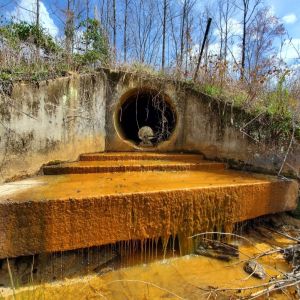
Perched culvert showing stream connectivity issue

Perched Culvert

Stream Barrier Assessment

Many aquatic species are at risk due to the degradation of water quality and impairments to habitat. A major source of documented habitat impairment for aquatic fauna is a lack of longitudinal stream connectivity caused by anthropogenic interactions primarily being in-stream barriers related to perched (elevated) culverts. Longitudinal connectivity of stream reaches and channels is necessary for many species to access spawning grounds and allow for adequate gene flow among populations in these reproductive areas. The fracturing of stream longitudinal connectivity also impacts fluvial regimes that influence the geomorphic watershed dynamics.

Impact of Stream Barriers:
  • Altered flow patterns leading to increased erosion
  • Destabilization of stream banks
  • Deposition of excessive sediment
  • Bed scouring and flooding
  • Degradation of public drinking water supplies
  • Infrastructure failure and increased utility costs

GSA is leading the effort to identify potential stream passage issues by founding an aquatic connectivity team, in collaboration with the Southeast Aquatic Resource Partnership (SARP) and other Alabama Rivers and Streams Network (ARSN) members. The mission of the team is to restore connectivity, habitat, and ecological functions to streams in the state by identifying, assessing, and prioritizing barriers to aquatic organism passage.
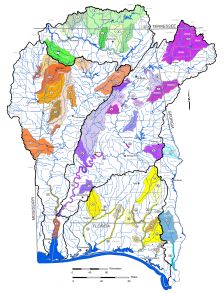
Strategic Habitat and River Reach Units

Aquatic Species Conservation in Alabama and Adjoining States

The USFWS, ADCNR, and GSA are focusing conservation activities for managing, recovering, and restoring populations of rare and/or protected fishes, mussels, snails, and crayfishes in targeted watersheds and river segments in Alabama. The 60 recognized SHUs and Strategic River Reach Units (SRRUs) include a substantial part of Alabama's remaining high-quality water courses and reflect the variety of aquatic habitats occupied by these species historically and presently.

Recognition of these SHUs and SRRUs facilitates the coordination of watershed management and restoration efforts as well as focusing funding to address habitat and water quality issues threatening these areas. The SHU concept was first applied as a pilot study in the North River.

Case Study: North River SHU

A watershed assessment of North River SHU was conducted by GSA and other local stakeholders in the upper Black Warrior watershed. This included:

  • Biological monitoring of fish and mussel populations
  • Stream habitat surveys and road crossing evaluations
  • Land cover analysis of pollution threats
  • Documentation of historic water quality and biological studies

This assessment provided a framework for the creation of the North River Watershed Management Plan (NRWMP). The NRWMP received 319 funding from the Environmental Protection Agency that was used to hire a watershed coordinator to begin restoration work. Similar watershed assessments have been conducted in the Bear, Big Canoe, Bogue Chitto, and Terrapin Creek SHUs.

To learn more about the statewide SHU effort, please visit the Alabama Rivers and Streams Network website

Cave Shrimp & Tuscumbia Darter Monitoring

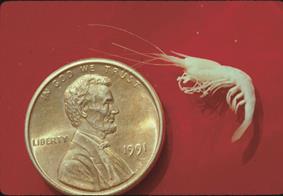
Cave Shrimp

Palaemonias alabamae

Alabama Cave Shrimp

Photo courtesy of Dave Dieter, Huntsville Times

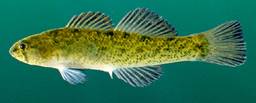
Tuscumbia Darter

Etheostoma tuscumbia

Tuscumbia Darter

Conservation at Redstone Arsenal

Alabama Cave Shrimp Monitoring

The Alabama Cave Shrimp, Palaemonias alabamae, is a federally listed endangered species found in Bobcat Cave on Redstone Arsenal (RSA) in Madison County. Through numerous cooperative projects between GSA, USFWS, and the Cultural and Natural Resources Directorate of the U.S. Army Aviation and Missile Command at RSA, and with the assistance of the Huntsville Grotto of the National Speleological Society, GSA has monitored that population and the water quality aspects of the cave and other nearby locations since 1990, with nearby Matthews Cave serving as a control.

For most of the project period monitoring the cave shrimp population included weekly or monthly visits to the cave recording numbers of individuals observed, numbers of gravid individuals, and other noteworthy life history observations, with monthly water quality sampling events. After several decades the observation trips have been greatly reduced from monthly to annual trips and water quality sampling from monthly to quarterly events.

Tuscumbia Darter Conservation

The Tuscumbia Darter, Etheostoma tuscumbia, is known to occur in several tributaries within the Indian Creek system on RSA, is a species of High Conservation Priority in Alabama, and is petitioned for federal listing as a threatened species. GSA has monitored the population in Williams Spring on RSA since 1999, employing a standardized sampling protocol, measurement of basic physical water quality parameters, and measurement of discharge during each site visit.

In a separate project, several field seasons were spent searching for additional populations on RSA and across its range. Qualitative collections for presence/absence were made at 98 locations within its historic range to refine its status and find new populations. The darter was found at 18 of 33 historic locations and at 8 of 61 new locations. All new collection locations were on RSA, mostly at the foot of low ridges along the margins of backwaters of Wheeler Reservoir of the Tennessee River. These locations were found where pre-impoundment springs were located but maintain sufficient characteristics of spring environments, including temperature regimes and vegetation, to permit this habitat-specific species to persist.

Additional Projects

Collaborative Conservation Efforts

Survey staff are assisting other Alabama Rivers and Streams Network (ARSN) team members and other agencies in several projects. Road/stream crossing assessments are being conducted in various SHUs in cooperation with USFWS, Cawaco, and the Alabama Forestry Association to identify possible stream passage issues.

Agricultural Best Management Practices

We are assisting staff from the Natural Resource Conservation Service (NRCS) assess the effectiveness of best management practices (BMPs) on selected streams in a heavily agricultural area on Sand Mountain in the Tennessee River Valley.

Birmingham Metropolitan Area Darters

For the past several years we have been assisting USFWS to protect populations of the several federally listed and petitioned darter species found in spring habitats in the greater Birmingham Metropolitan area.

Trispot Darter Conservation

We recently cooperated with Alabama Power Company, Cawaco, Georgia Department of Natural Resources, USFWS, and the University of West Alabama in finding populations of the petitioned Trispot Darter, Etheostoma trisella, in the middle Coosa River watershed, and continue to work with USFWS, Alabama Power Company, Conservation Fisheries, Inc. (CFI), ADEM, and local landowners to further protect and recover that species.